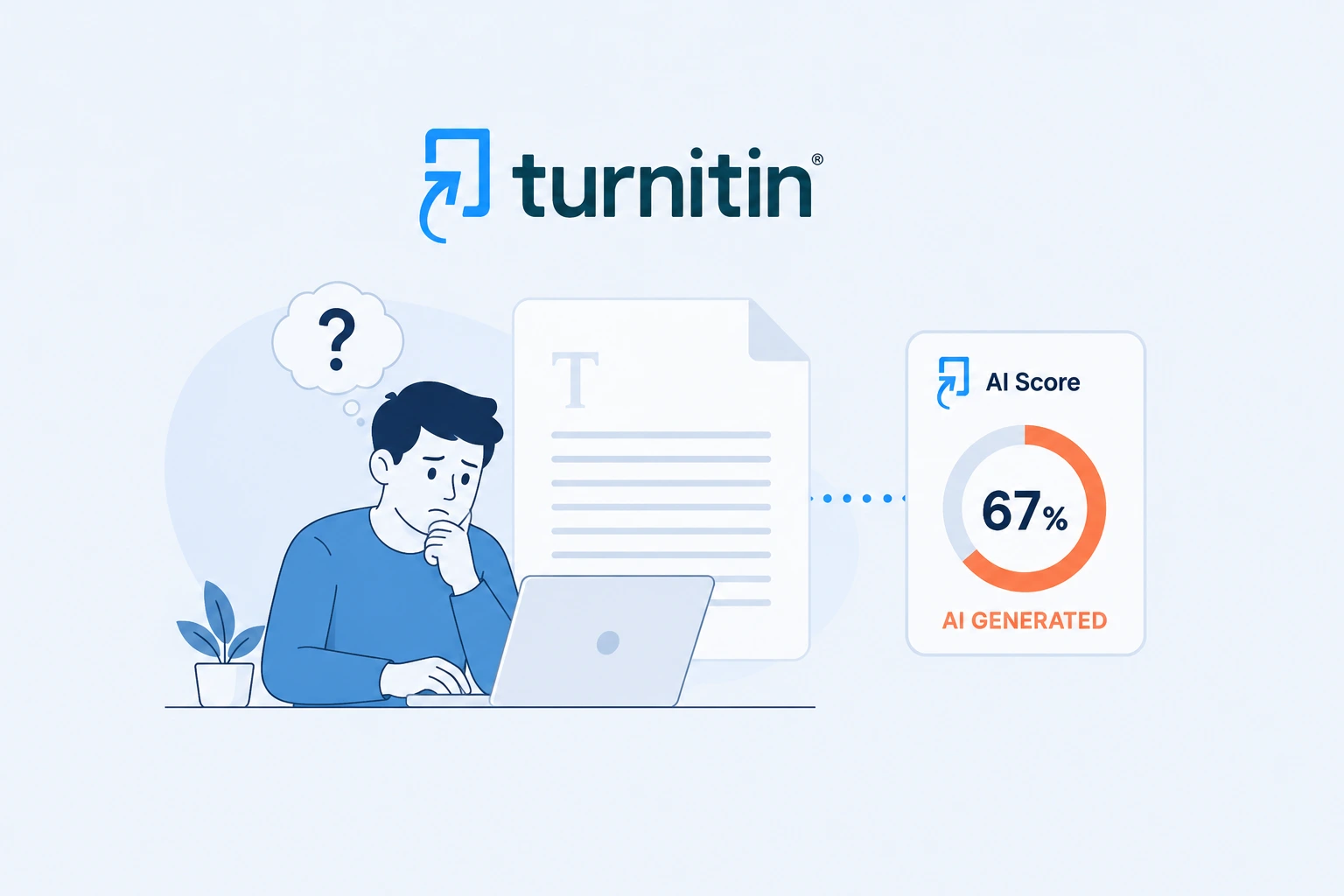
You spent days on that paper. You researched, drafted, revised, and proofread every sentence yourself. Then you get the Turnitin report back and the AI detection score is high — high enough to make your stomach drop. And you know, with complete certainty, that you did not use ChatGPT or any other AI tool to write it.
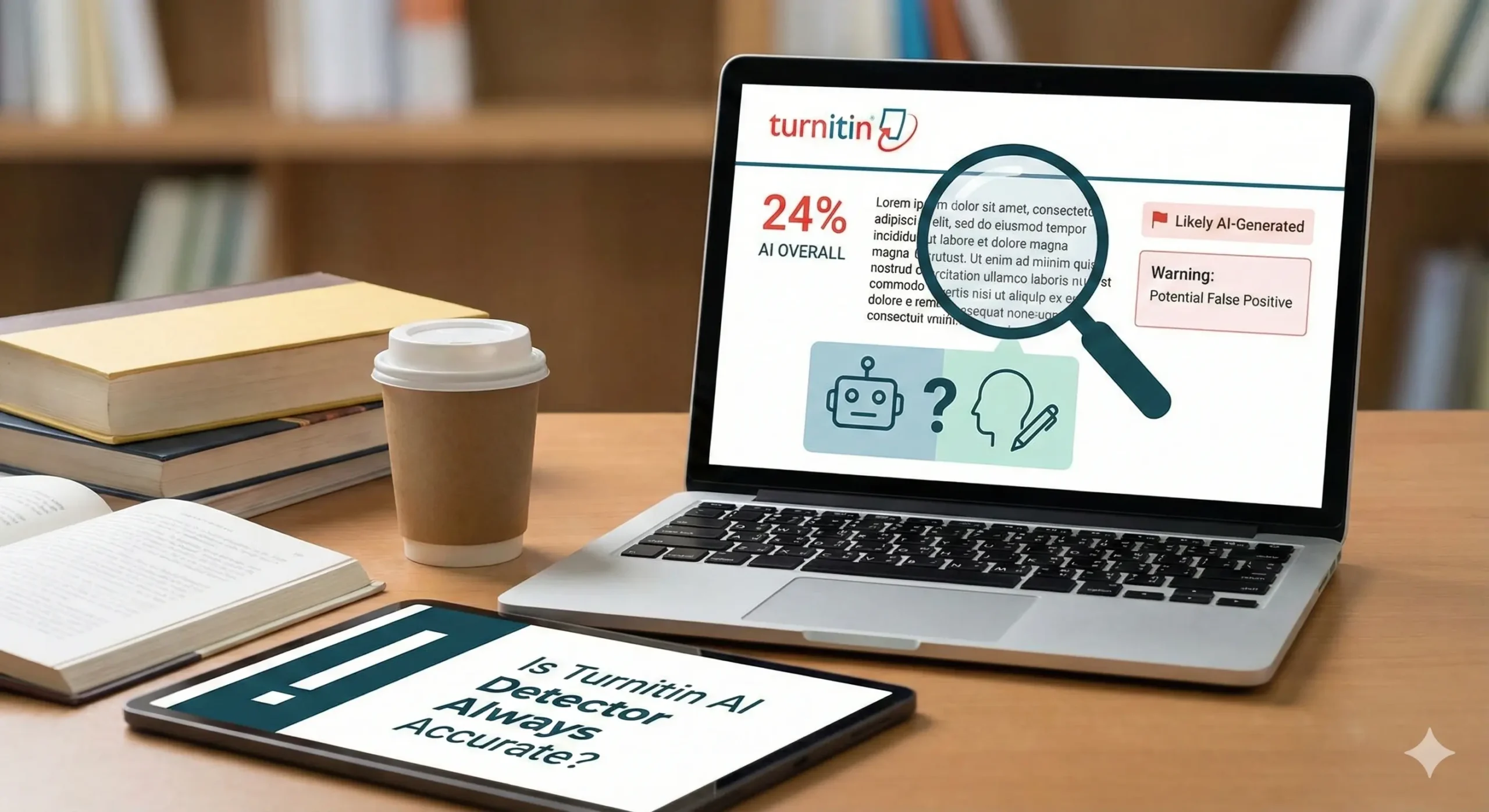
This situation is more common than most institutions publicly acknowledge. Turnitin’s AI detection system is not infallible, and there are specific, well-documented reasons why entirely human-written work can receive a high AI score. Understanding those reasons is the first step to responding effectively.
First: What Does the AI Score Actually Measure?
Before diagnosing why your score is high, it helps to understand what Turnitin’s AI detection is actually evaluating.
Turnitin’s model does not check whether you opened ChatGPT. It has no access to your browser history, your files, or any record of how the paper was produced. What it does is analyze the statistical properties of your writing — specifically patterns in word predictability, sentence length variation, and structural consistency. Text that scores low on unpredictability and high on structural uniformity looks statistically similar to AI-generated text, regardless of who actually wrote it.
This is the core limitation of every AI detector currently in use: it measures writing patterns, not writing origins. And certain types of entirely human writing can produce patterns that closely resemble AI output.
Turnitin itself acknowledges this on its official blog, stating that false positives — cases where human-written text is incorrectly identified as AI-generated — are a genuine possibility. The company reports a false positive rate of less than 1% in its own controlled testing. That sounds reassuring until you consider the scale: Turnitin processes hundreds of millions of submissions. Even at less than 1%, that represents a very large number of real students receiving a flag on entirely original work.
Reasons Your Human-Written Paper May Have a High AI Score
1. Your Writing Style Is Formal and Structured
Academic writing is by its nature formal, precise, and structured. It follows conventions: topic sentences, supporting evidence, transitions, conclusions. The problem is that these same conventions — consistent paragraph structure, predictable sentence openings, logical flow — are also the characteristics AI models are optimized to produce.
A student who writes particularly clean, well-organized prose with minimal stylistic variation can inadvertently produce writing that scores high on the same metrics Turnitin uses to flag AI text. This is especially common in STEM subjects, law, and medicine, where writing follows rigid structural templates and specialized but repetitive vocabulary.
2. You Are a Non-Native English Speaker
This is one of the most significant and documented risk factors. Research has consistently found that non-native English speakers are flagged at substantially higher rates than native speakers.
The reason is straightforward: ESL academic writing tends to use simpler, more consistent sentence structures, more predictable vocabulary choices, and more formulaic transitions — because these are the patterns non-native writers learn in formal English language instruction. Those same patterns are what AI detectors flag as statistically machine-like.
A Stanford study found that popular AI detectors misclassified writing by non-native English speakers as AI-generated at strikingly high rates. Turnitin’s own training data is weighted toward native English academic writing, meaning its baseline for what “human writing” looks like may not reflect the full range of how real students write in English.
If you are an international student writing in English as a second or third language, your risk of a false positive is meaningfully higher than that of a native English speaker writing the same paper.
3. You Used Grammarly or a Similar Editing Tool
This one surprises many students. Running a paper through Grammarly, ProWritingAid, or a similar grammar checker before submission can actually increase the Turnitin AI score — even when every idea and sentence in the paper is originally yours.
Why? These tools smooth out natural human writing variation. They correct irregular punctuation, standardize sentence structure, fix inconsistencies in tone, and replace uncommon word choices with more standard alternatives. The result is cleaner, more grammatically uniform text — which is precisely what Turnitin’s model associates with AI generation.
Natural human writing has what researchers call “burstiness” — variation in sentence length, rhythm, and complexity. Grammar checkers reduce that burstiness. A paper that went through heavy Grammarly editing may read as more uniform and statistically predictable than the original draft, which pushes the AI score upward.
4. You Are Writing in a Highly Technical or Formulaic Discipline
Certain subject areas require writing that is inherently formulaic by academic convention. Scientific methods sections, legal case analysis, literature review summaries, and lab reports all follow fixed structural templates that do not vary much from paper to paper — or from student to student.
When Turnitin’s model encounters text that is structurally uniform and uses domain-specific vocabulary in predictable patterns, it may score it as statistically AI-like — even though the student was simply following the required format for their discipline. A chemistry lab report written entirely by hand will read very differently from a personal essay, but both are equally human.
5. Your Writing Process Was Unusually Consistent
Most human writing is inconsistent. A first draft will have stronger sections and weaker ones. Real writers make unexpected word choices, shift register slightly between paragraphs, and produce subtle inconsistencies in tone and rhythm. These imperfections are part of what AI detectors learn to associate with authentic human writing.
A student who is an exceptionally disciplined and consistent writer — one whose prose does not vary much in structure or vocabulary across thousands of words — may inadvertently write in a style that the model reads as too uniform to be human. The same is true of a student who has revised a paper extensively: heavy revision tends to iron out natural variation and produce a more consistently polished final product.
6. The Paper Contains a Mix of AI-Assisted and Human-Written Sections
If any part of your writing process involved AI tools — even in ways that feel minor, such as using ChatGPT to help outline a structure, generate a few example sentences, or rephrase a paragraph you then heavily edited — those segments can affect the overall score.
Turnitin’s model works at the segment level, analyzing overlapping windows of approximately 250 words. A single section of AI-generated or AI-assisted text, even if surrounded by entirely original writing, will produce a flag. The overall percentage in the report reflects what proportion of qualifying text was flagged — so even a relatively small AI-assisted section can produce a score that looks alarming in context.
If this applies to your situation, the honest path is to acknowledge the extent of AI assistance to your instructor rather than to contest the flag as a false positive.
What the Score Does — and Does Not — Mean
A high AI detection score does not mean Turnitin has determined you used AI. It means the statistical properties of your writing resemble AI-generated text. Those are two different things.
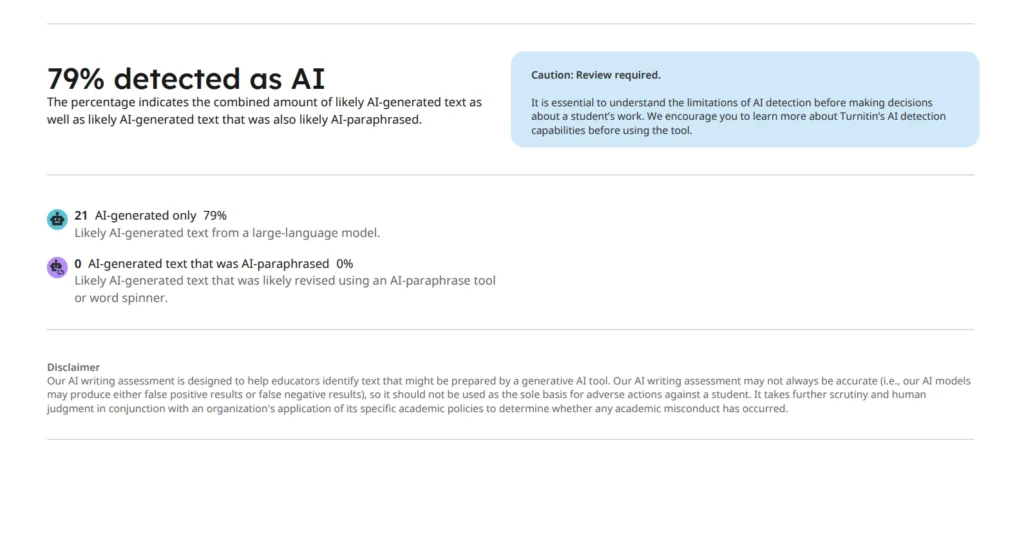
Turnitin’s own documentation is explicit on this point: the AI writing detection model “may misidentify human-written, AI-generated, and AI-paraphrased text” and the score “should not be used as the sole basis for any adverse actions against a student.” Multiple universities — including Vanderbilt University and Curtin University in Australia — have gone further and disabled Turnitin’s AI detection entirely, citing reliability concerns.
Instructors who understand how the tool works treat the score as a starting point for a conversation, not a verdict. The score tells them something is worth looking at. Your explanation, your draft history, and your ability to discuss the work determine what happens next.
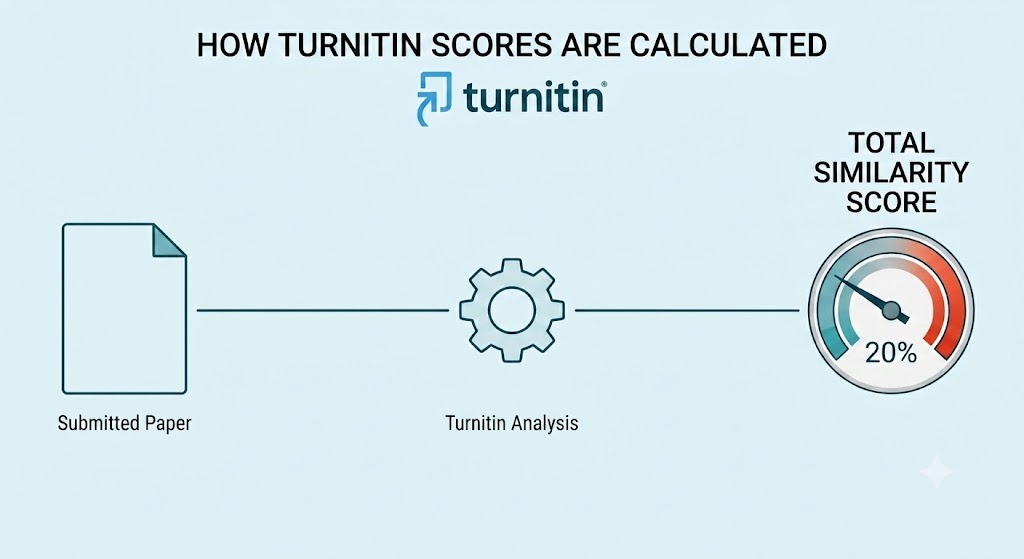
For a fuller explanation of how the AI score is generated, see the post on how Turnitin scores are calculated. For context on why scores below 20% are suppressed entirely, see why Turnitin doesn’t show AI scores below 20%.
What to Do If Your Paper Has Been Flagged
Step 1 — Stay calm and do not alter your submission
Editing your paper after receiving a flag makes things significantly worse. It suggests consciousness of guilt and removes the version of the text that the instructor has already seen. Leave your submitted document exactly as it is.
Step 2 — Gather your writing evidence
The most powerful defense against a false AI flag is evidence of your writing process. Collect:
- Previous drafts — any earlier versions of the paper saved locally, in email attachments, or in cloud storage
- Version history — Google Docs and Microsoft Word Online both automatically save version histories with timestamps. This is among the strongest evidence available, as it shows the paper developing over time in your account
- Research notes and outlines — any planning documents, annotated sources, or brainstorming notes that demonstrate how you approached the paper
- Browser history — records of the sources you consulted while researching
Step 3 — Contact your instructor proactively
Do not wait to be called in. Reach out to your instructor directly, explain that you have seen the flag and that the paper is your own original work, and offer to provide the evidence above. Proactive communication is far more effective than a defensive response after a formal inquiry has begun.
Step 4 — Understand your institution’s process
Most universities have a formal academic integrity process that includes the right to respond to any allegation before a decision is made. Know what that process is at your institution. A Turnitin AI flag is not a verdict, and no reputable institution will apply a penalty without giving you the opportunity to present your case.
Step 5 — Check your report before your next submission
The most effective way to avoid this situation in future is to see your AI score before your institution does. Getting a Turnitin report on a draft gives you the opportunity to understand what is flagged and why — and to adjust your writing accordingly before final submission. See the guide on how to get a Turnitin report without a university login for how to do this.
Conclusion
A high Turnitin AI score on a paper you wrote yourself is alarming — but it is not a verdict, and it is not without explanation. Formal academic writing style, non-native English writing patterns, grammar tool use, and discipline-specific conventions are all documented causes of false positives in AI detection. Turnitin’s own documentation acknowledges that its model can misidentify human-written text, and the score is explicitly not intended to be used as the sole basis for any adverse action.
The most important thing you can do is respond with evidence. Draft history, version records, research notes, and a clear explanation of your writing process are what shift the conversation from suspicion to resolution. The score opens a question — your evidence answers it.
For more on how Turnitin’s AI detection works and what instructors actually see in the report, see the Turnitin AI detection report example.
Frequently Asked Questions (FAQ)
Yes. Turnitin’s AI detection measures statistical writing patterns, not how a paper was actually produced. Certain types of entirely human writing — particularly formal academic prose, ESL writing, and heavily edited text — can produce patterns that resemble AI-generated text and trigger a high score. Turnitin itself acknowledges that false positives are possible.
Recurring high scores on human-written work are most often linked to writing style factors: highly structured or uniform prose, consistent sentence length, predictable vocabulary, or heavy editing through tools like Grammarly. If you write in English as a second language, that also significantly increases your statistical risk of a false positive.
It can. Grammar tools reduce natural variation in sentence structure and rhythm — the same variation that Turnitin’s model associates with human writing. A paper that has been heavily corrected by a grammar tool may read as more statistically uniform than your original draft, which can push the AI detection score upward.
Not necessarily. Instructors who understand Turnitin’s limitations treat the AI score as a signal for further review, not a conclusion. Turnitin’s own documentation instructs educators not to use the score as the sole basis for any adverse action. Your ability to explain the paper and provide draft evidence matters far more than the score.
The most useful evidence is anything that shows your writing process over time: previous drafts, timestamped version history from Google Docs or Word Online, research notes, outlines, and annotated sources. This kind of evidence demonstrates that the paper developed through a real human writing process.
Yes, this is well-documented. Non-native English speakers face significantly higher false positive rates because the formal, structured writing patterns common in ESL academic writing overlap with the statistical characteristics Turnitin associates with AI generation. Multiple studies have found that AI detectors misclassify non-native English writing at substantially higher rates than native-speaker writing.
Was this helpful?