As higher education becomes increasingly globalized, the boundaries of academic integrity have expanded far beyond the English-speaking world. Universities from Madrid to Tokyo rely on digital tools to ensure the authenticity of student work. However, a common question arises among international students and faculty: How many languages does Turnitin support?
While Turnitin is widely recognized for its dominance in English-language plagiarism detection, its capabilities in other languages are often misunderstood. Whether you are submitting a thesis in Spanish, a research paper in Chinese, or an essay in Arabic, understanding how the system processes different scripts and linguistic structures is crucial. With the rise of AI-generated content and sophisticated translation tools, Turnitin’s multilingual support has become more complex than ever.
Why Language Support Matters in Plagiarism Detection
In the modern academic landscape, multilingualism is the norm rather than the exception. International universities often host students from dozens of different countries, many of whom may be writing in their second or third language. Furthermore, academic publishing is a global endeavor; research conducted in one language is frequently cited or referenced in another.
Without robust language support, a plagiarism detection system would be inherently biased. It would effectively “clear” a student who plagiarized a source in French while strictly penalizing one who used an English source. As universities move toward “inclusive integrity,” the ability to scan documents in multiple languages ensures that all students are held to the same standard, regardless of the language of instruction.
Multilingual assignments also present a unique challenge: cross-language plagiarism. This occurs when a student finds a source in one language (e.g., German) and translates it into another (e.g., English) to bypass standard detection. Without the ability to “read” and compare across linguistic barriers, detection tools would miss a significant portion of academic misconduct.
Related reading: Similarity vs Plagiarism: What Does Turnitin Really Detect?
Languages Supported by Turnitin for Similarity Detection
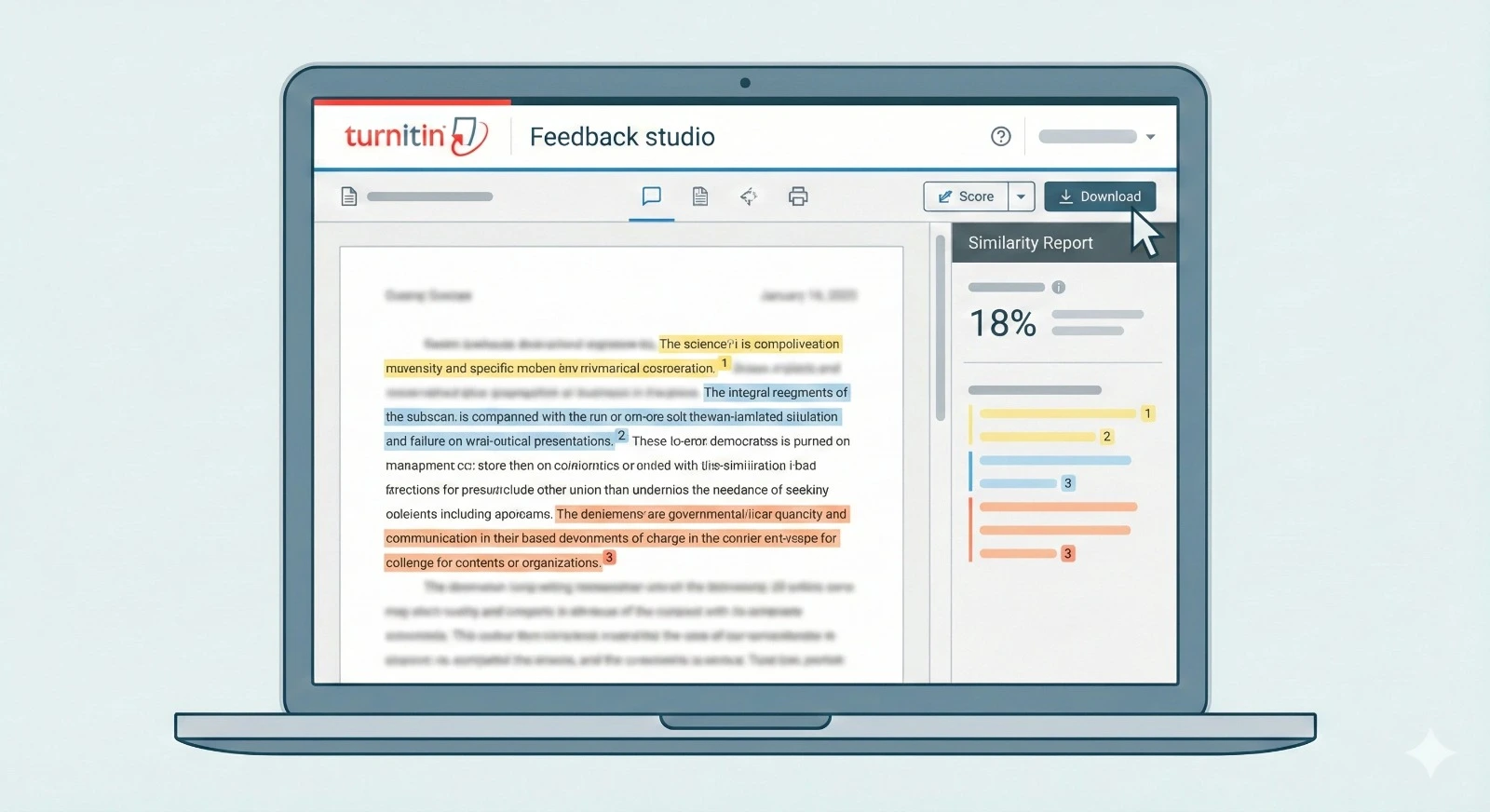
Turnitin’s core strength lies in its Similarity Report, which compares submitted text against a massive database of billions of web pages, archived student papers, and leading academic journals. Unlike AI detection, which requires complex linguistic modeling, similarity detection is primarily based on text-matching algorithms.
While Turnitin’s software can identify content in 176 different languages, it provides deep similarity checking and reporting for more than 40 languages. Because the system identifies “strings” of text rather than just “meaning,” it can effectively find matches in any language that uses standard character encoding (such as Unicode).
Major Languages Supported for Similarity Checking:
| Language Category | Examples of Supported Languages |
| European | English, Spanish, French, German, Portuguese, Italian, Dutch, Swedish, Danish, Norwegian, Finnish, Greek, Polish, Czech, Hungarian, Russian |
| Asian | Chinese (Simplified & Traditional), Japanese, Korean, Vietnamese, Thai, Hindi, Bengali |
| Middle Eastern | Arabic, Hebrew, Farsi (Persian), Turkish |
| Others | Malay, Indonesian, Catalan, Croatian |
The Growth of Non-English Content
In recent years, Turnitin has seen exponential growth in submissions in Korean, Arabic, French, German, Spanish, and Russian. This indicates that universities in these regions are increasingly adopting automated integrity tools to align with global standards.
It is important to note that Turnitin does not require a document to be written in English for a similarity check to occur. If you submit a paper in Portuguese, the system will compare it against its database of Portuguese-language websites, journals, and previously submitted Portuguese papers. However, the “depth” of the search depends on the volume of content Turnitin has indexed for that specific language.
Can Turnitin Detect Translated Plagiarism?
One of the most sophisticated features of the platform is Translated Matching. This feature addresses the “translation loophole,” where a student translates text from one language to another to bypass standard detection.
For customers using Turnitin Feedback Studio and Originality Check, the system can compare submissions across more than 40 languages. When enabled, the system identifies the source language, translates the content into English, and checks it against the vast English-language database.
Key Features of Translated Matching:
- Dual Reporting: The system produces translation similarity reports in both English and the original submitted language, allowing instructors to see exactly where the source material originated.
- Cross-Linguistic Coverage: This ensures that a student cannot simply translate a German research paper into English (or vice versa) without the system flagging the original source.
- Manual Activation: This feature is typically a setting toggled by the institution, meaning it may not be active for every single submission unless required by the university policy.
Languages Supported for Turnitin AI Detection
While similarity detection is broad and covers 176 languages, AI writing detection is much more restricted. Detecting AI-generated text requires a specific model trained on the patterns of Large Language Models (LLMs) like ChatGPT, Claude, and Gemini.
As of early 2026, Turnitin’s AI detection is officially supported in a limited subset of languages:
- English (Full support, including AI paraphrasing detection)
- Spanish (Dedicated model for Spanish-language AI patterns)
- Japanese (Specialized model released to support Japanese academic integrity)
For these three languages, Turnitin provides a specific “AI Writing” percentage. For other languages—such as French, German, or Arabic—the AI detection tool is either unavailable or remains in an “experimental” phase.
Suggested reading: Can Turnitin Detect AI-Generated Content?
Why AI Detection Is Harder in Non-English Languages
The disparity between similarity detection (176 languages) and AI detection (3 primary languages) comes down to how these technologies are built.
1. Limited Training Datasets
AI detectors are trained on millions of pairs of human-written vs. AI-generated text. The vast majority of these datasets are in English. Training a reliable detector for “lesser-used” languages requires a massive amount of high-quality local data that isn’t always available.
2. Linguistic Variation
Every language has unique structural rules. An AI detector trained on English patterns would be ineffective at spotting “robotic” patterns in a language with different syntax, such as Arabic or Russian.
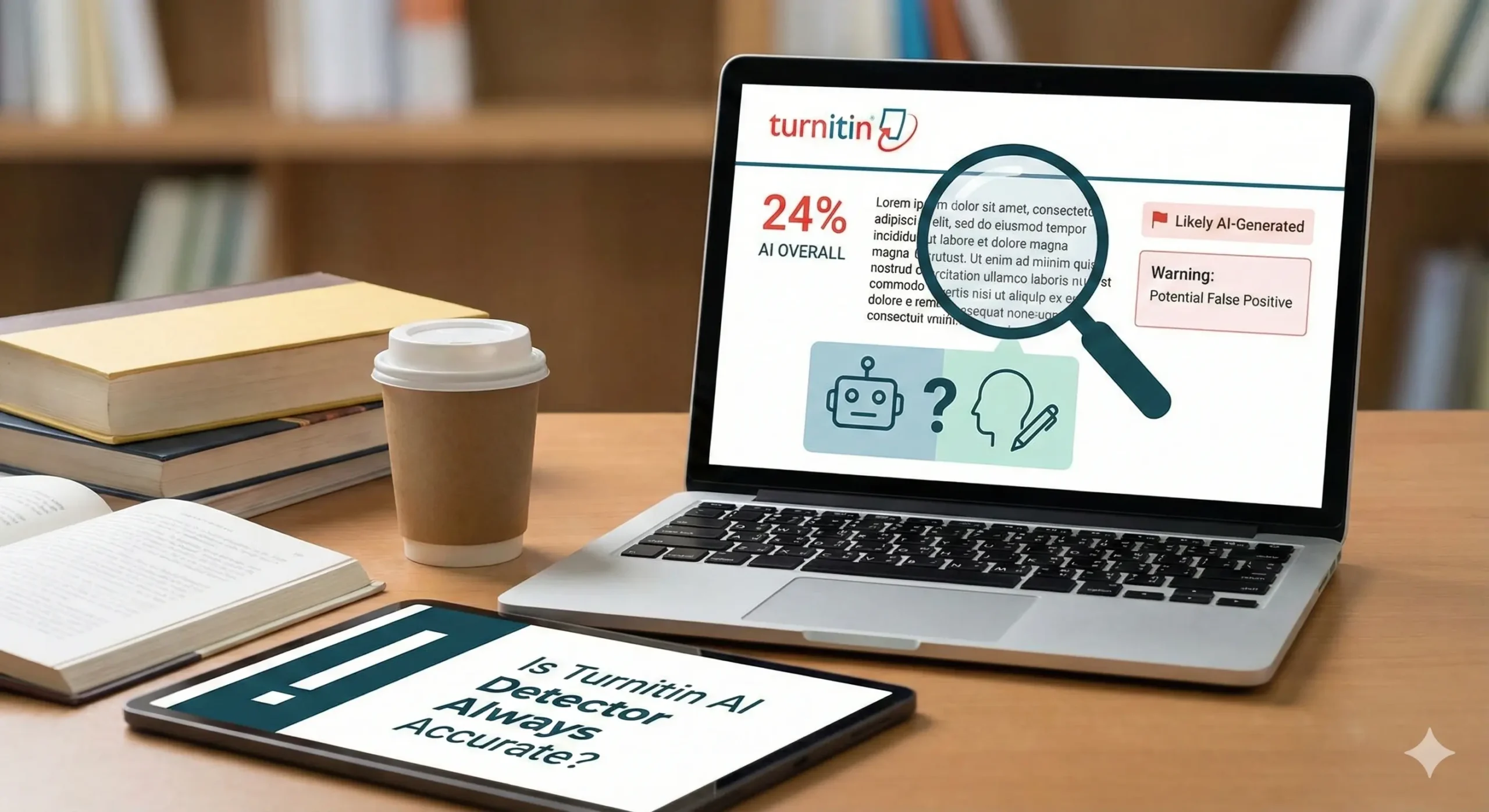
Read more: Is Turnitin AI Detector Always Accurate?
Final Verdict — How Many Languages Does Turnitin Really Support?
In summary, Turnitin’s reach is wider than most students realize:
- For Identification: Turnitin can recognize and process content in 176 languages.
- For Similarity & Translation: It offers deep checking and translated reports for 40+ languages.
- For AI Detection: Support is currently focused on English, Spanish, and Japanese.
The move toward supporting “lesser-used” languages ensures that academic integrity is no longer an “English-first” concept but a global standard.
Frequently Asked Questions (FAQ)
Turnitin’s software identifies content in 176 languages. For similarity checking and translated matching reports, it supports over 40 languages.
No. While it was originally developed for English, it is now a multilingual tool used globally, with significant growth in Arabic, Korean, and Russian submissions.
Yes. Turnitin has an extensive database for both languages and provides full similarity reports for them.
Currently, official AI writing detection is available for English, Spanish, and Japanese. Other languages are being developed but may not yet produce a score.
Yes, for over 40 languages. It can translate a submission into English to check it against English sources and provide a “Translation Similarity Report.”
Was this helpful?