For many students and researchers, submitting a paper to Turnitin is a nerve-wracking experience. The moment a report generates, eyes immediately dart to the percentage score. If the number is high, panic often sets in. “Does this mean I plagiarized?” is the most common question that follows.
The short answer is: No.
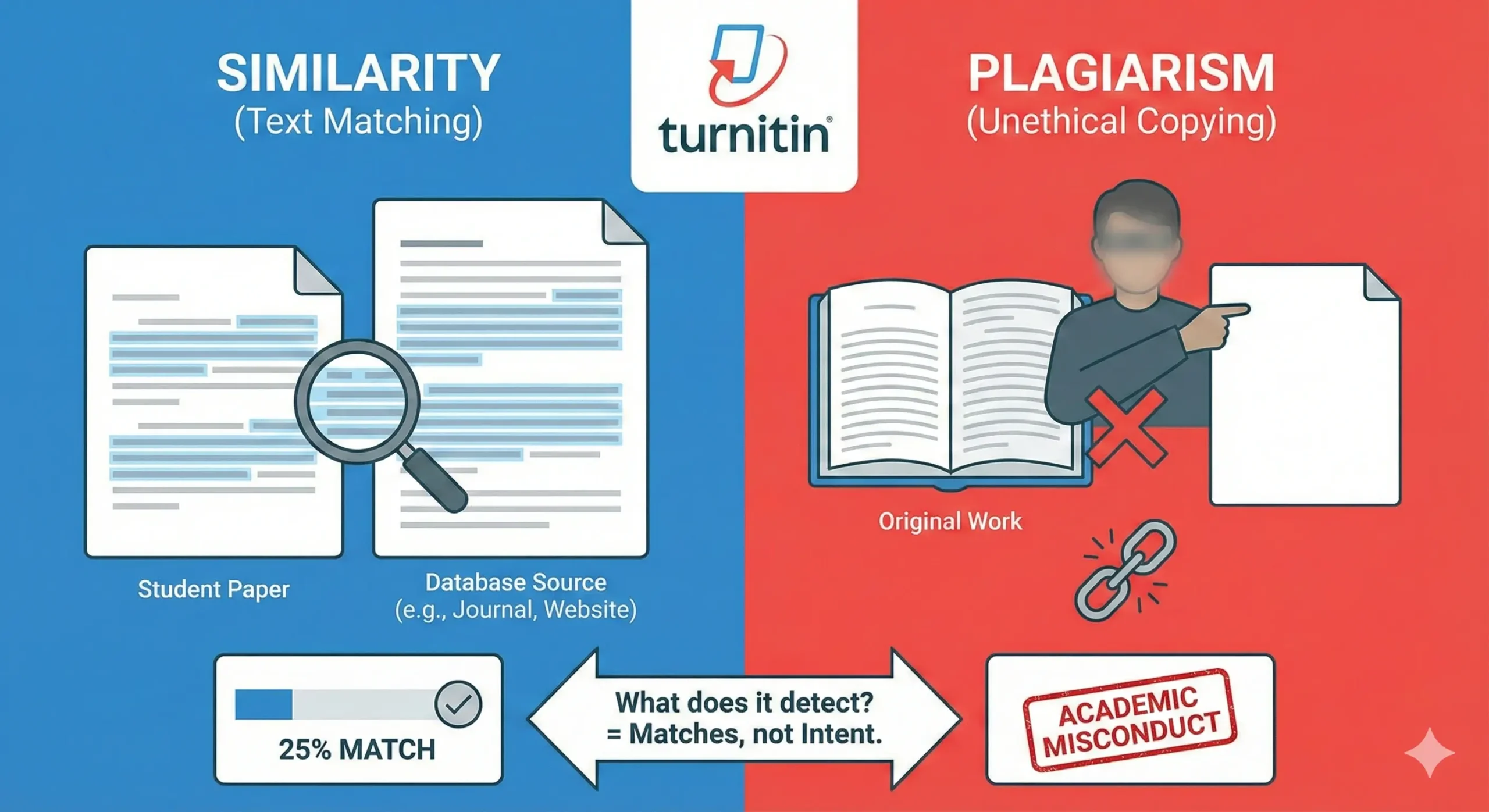
A high similarity percentage does not automatically equate to academic misconduct. To navigate these reports effectively, it is crucial to understand the fundamental difference between “similarity” and “plagiarism” and to clarify what tools like Turnitin actually detect.
What Is a Similarity Score?
At its core, Turnitin is a text-matching tool, not a plagiarism detector. When you submit a document, the software compares your text against a massive database containing:
- Billions of web pages (current and archived).
- Scholarly journals, articles, and publications.
- Millions of student papers previously submitted to the system.
The similarity score (often called the Similarity Index) simply represents the percentage of your paper that matches text found in those databases. If you write a sentence that appears exactly the same way in a journal article or a website, Turnitin flags it.
Crucially, this system identifies matches regardless of context. A correctly cited quote, a common phrase, or a bibliography entry can all trigger a “match,” contributing to your overall similarity score.
What Plagiarism Actually Means
While similarity is a technical measurement of matching text, plagiarism is an ethical violation. Plagiarism is defined as using someone else’s work, ideas, or intellectual property without proper attribution or permission.
Plagiarism involves intent and execution. It covers:
- Submitting someone else’s work as your own.
- Copying text without using quotation marks or citations.
- Paraphrasing incorrectly without crediting the original source.
The key distinction is attribution. You can have a high level of text similarity (for example, by quoting a primary source extensively) without committing plagiarism, provided those quotes are cited correctly according to your academic style guide.
Read more about plagiarism in this blog: What Is Plagiarism? A Complete Guide for Students and Researchers
What Turnitin Can and Cannot Do
To interpret a report correctly, you must distinguish the tool’s capabilities from human judgment.
What Turnitin Does
- Compares Submissions: It scans your text against its databases to find exact or near-exact matches.
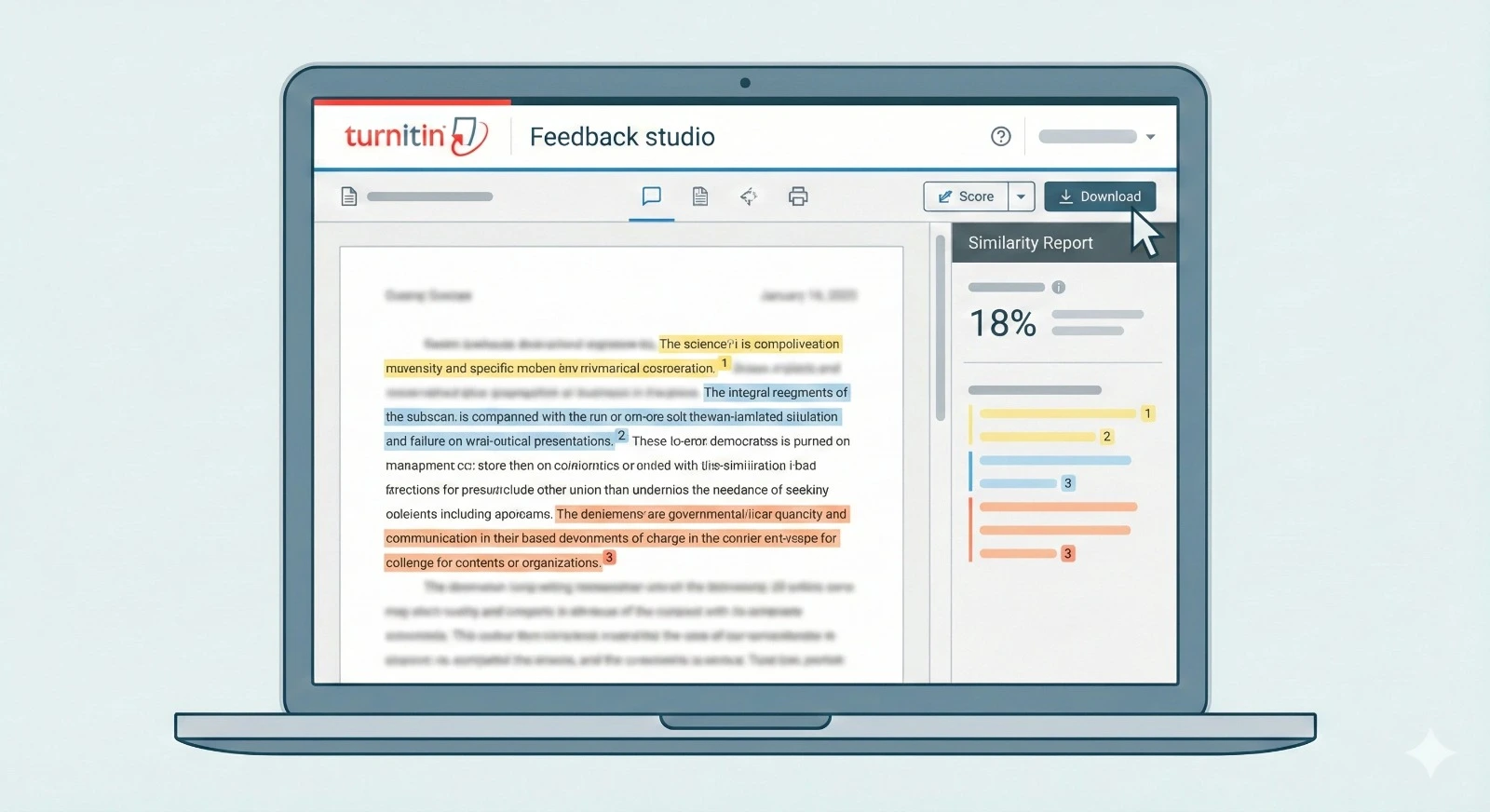
- Highlights Matches: It generates a report highlighting specific sections of text that correspond to existing sources.
- Calculates Percentage: It provides a raw number indicating how much of the total word count matches other sources.
What Turnitin Does Not Do
- Decide Guilt: Turnitin cannot determine if you “cheated.” It does not know if a match is a stolen paragraph or a properly cited quote.
- Understand Intent: The software cannot distinguish between accidental oversight and malicious copying.
- Replace Instructors: Only a human—usually your professor or an academic integrity officer—can review the report and decide if plagiarism has occurred.
Common Misunderstandings
There are several myths surrounding the Turnitin similarity vs plagiarism debate that often lead to unnecessary anxiety.
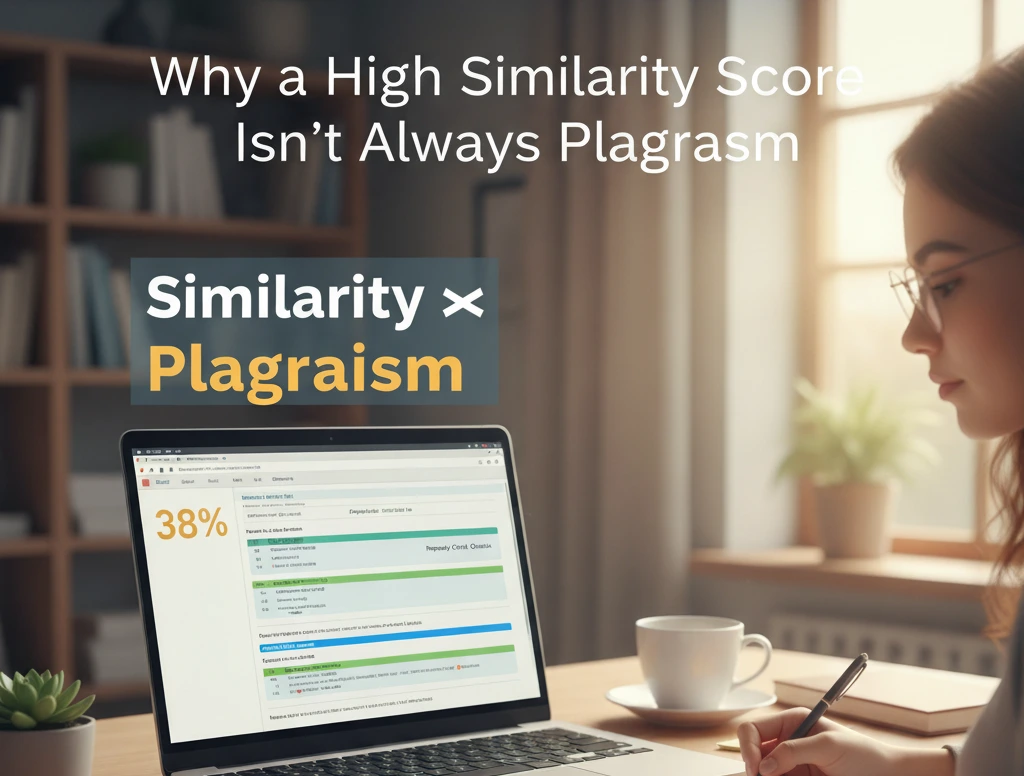
1. High Similarity ≠ Plagiarism A paper could have a 35% similarity score because it includes a template cover sheet, a long bibliography, and extensive direct quotations that are all properly cited. In this case, there is high similarity but zero plagiarism.
Read more: Why a High Similarity Score Isn’t Always Plagiarism
2. Low Similarity ≠ Originality Conversely, a paper with a 2% score could still contain plagiarism. If a student pays someone else to write an essay (contract cheating) or translates a text from another language without citation, Turnitin might not flag it as a text match, but it is still academic misconduct.
3. Cited Sources Increase Similarity Many students believe that citing a source stops Turnitin from flagging it. This is false. Unless the settings are adjusted to exclude quotes and bibliographies, Turnitin will highlight cited text because it matches a source in the database.
How Similarity Reports Are Interpreted
Since the score is just a number, how do educators actually use it? When instructors review a Turnitin plagiarism check, they look at the nature of the matches rather than just the percentage.
- Source Quality: Is the match from a legitimate academic source that has been cited, or is it a block of text copied from Wikipedia?
- Original Analysis: Is the majority of the paper original thought, or is it just a “patchwork” of other people’s sentences strung together?
- Technical Matches: Educators often ignore matches found in the references list, standard headings, or common terminologies (e.g., “The results of this study show that…”).
Acceptable thresholds vary significantly by institution and discipline. A law paper requiring specific statutory language will naturally have a higher similarity score than a creative writing assignment. For a deeper dive into scoring, read our guide on What Is a Good Turnitin Similarity Percentage?
Final Takeaway
Understanding what Turnitin detects is the first step to academic confidence. Remember:
- Similarity is a screening tool, not a verdict of guilt.
- Plagiarism requires human review to determine intent and context.
- Context matters—a properly cited paper can have a similarity score and still be perfectly acceptable.
By focusing on good academic practice rather than fearing the percentage, you can ensure your work stands up to scrutiny.
Frequently Asked Questions (FAQs)
Is a 20% similarity score bad? Not necessarily. It depends on what caused the matches. If the 20% consists of properly cited quotes and a bibliography, it is usually acceptable.
Does Turnitin automatically detect plagiarism? No. It detects text similarity. A human must review the report to determine if that similarity constitutes plagiarism.
Can cited sources increase similarity? Yes. Turnitin matches text regardless of whether you cited it. However, instructors can filter out quotes and bibliographies when reviewing the report.
Was this helpful?