The rise of generative AI has sparked an ongoing game of cat and mouse between student writers and academic integrity tools. As AI detectors like Turnitin have improved, students have increasingly turned to “word spinners” and paraphrasing tools—most notably QuillBot—in an attempt to mask AI-generated content. The most frequently asked question is: Can Turnitin AI detect QuillBot?
The pressing question for many users is no longer just “Can Turnitin detect ChatGPT?” but rather, “Can Turnitin detect text that was written by AI and then rewritten by QuillBot?”
In this article, we conduct a real test to analyze Turnitin’s AI current capabilities.
How Turnitin’s AI Writing Detection Works Can Turnitin AI detect Quillbot
To understand if Turnitin can catch QuillBot, we first need to understand how it analyzes text. Early versions of Turnitin’s AI detector simply looked for the statistical patterns typical of Large Language Models (LLMs) like GPT-4. However, Turnitin has upgraded its system to detect AI-paraphrased content.
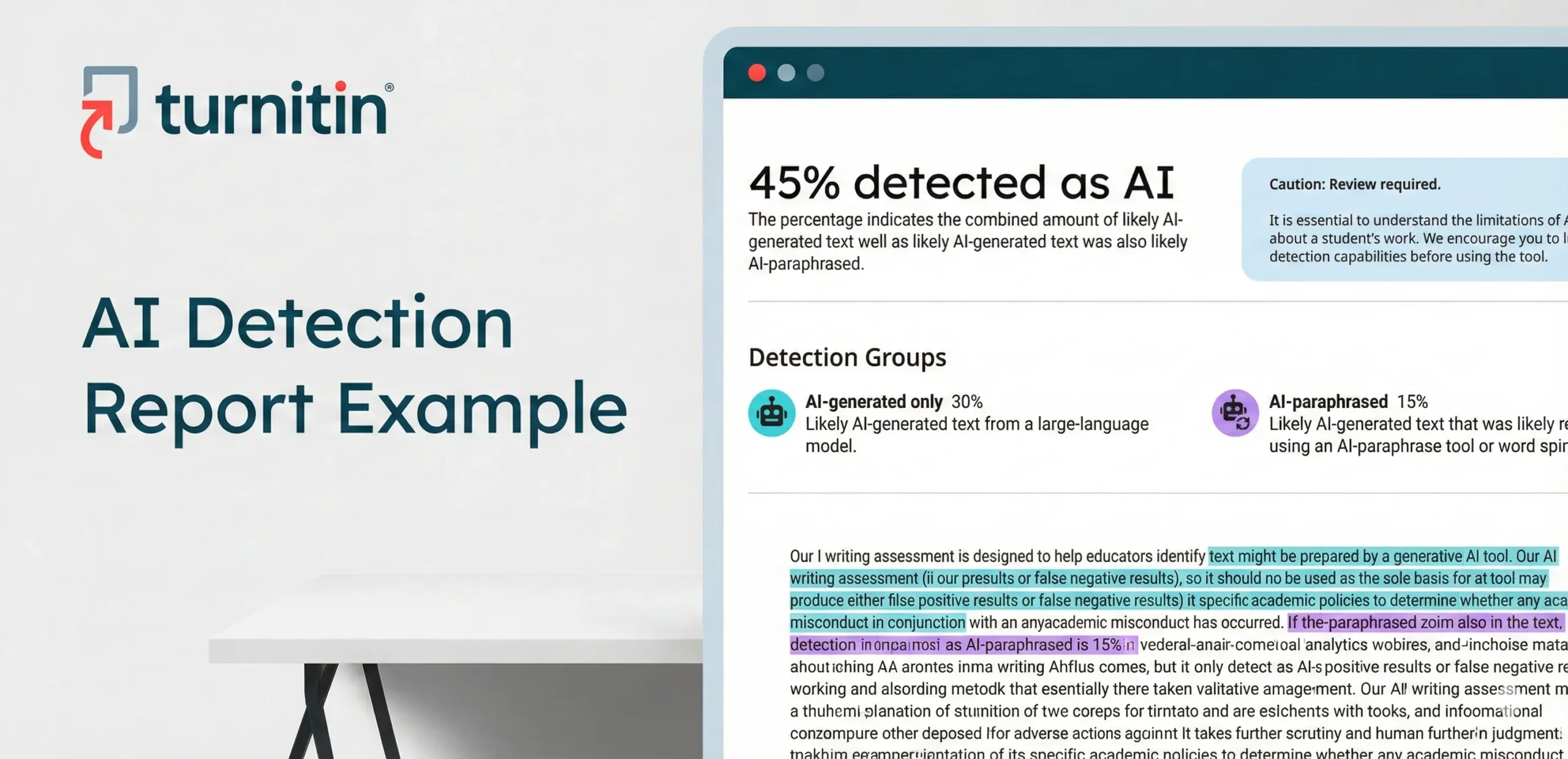
The modern Turnitin AI report now breaks down detection into two distinct categories:
- AI-Generated Only (Cyan Highlight): Text likely created by an LLM (e.g., ChatGPT, Claude) without significant modification.
- AI-Generated & AI-Paraphrased (Purple Highlight): Text that appears to have been generated by AI and subsequently modified by a word spinner or paraphrasing tool (e.g., QuillBot).
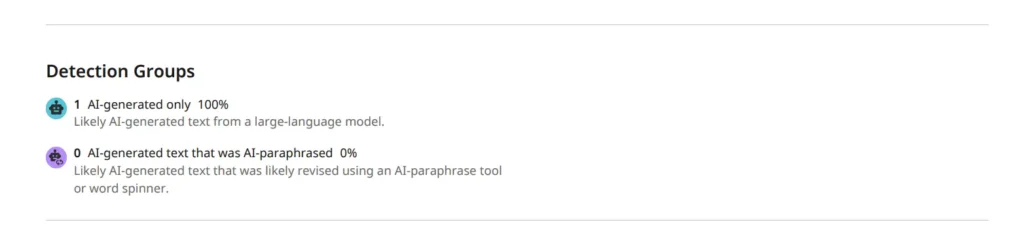
Read more: Turnitin AI Detection Report Example
Turnitin’s algorithms look for “fingerprints” in syntax and word choice. While LLMs predict the next most probable word, paraphrasing tools like QuillBot replace these words with synonyms. However, they often leave behind a secondary statistical pattern—a sort of “robotic inconsistency”—that Turnitin’s newer models are trained to identify.
Setting Up the Real Test — Text and Paraphrasing
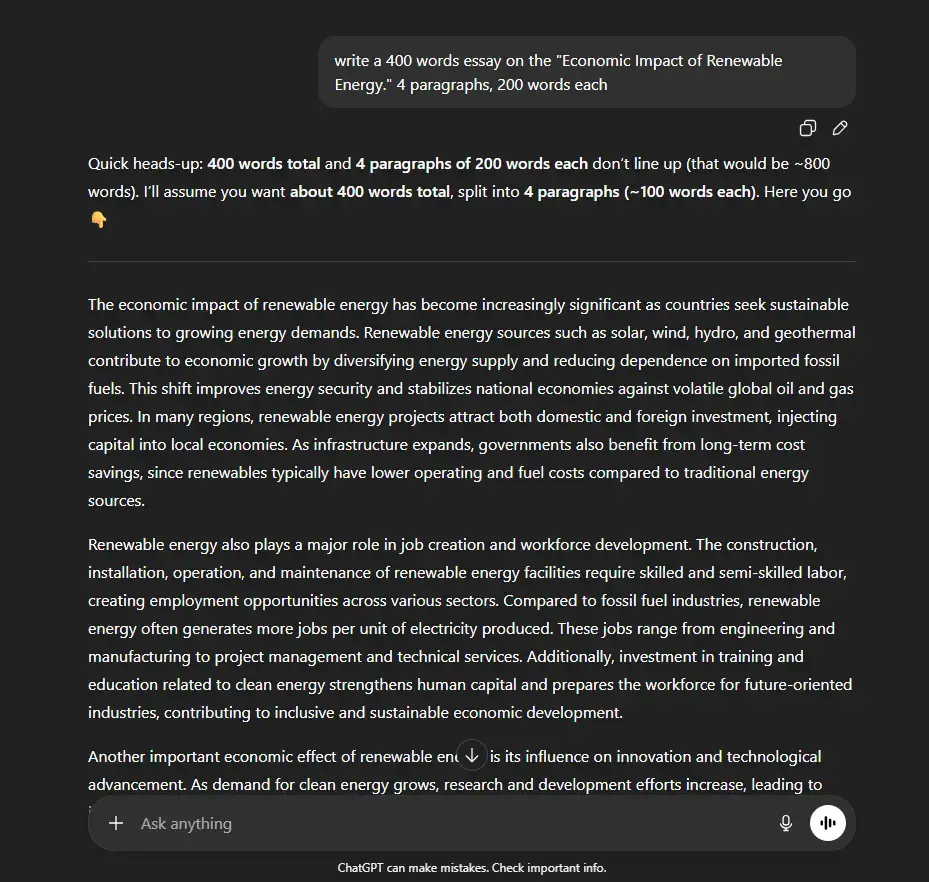
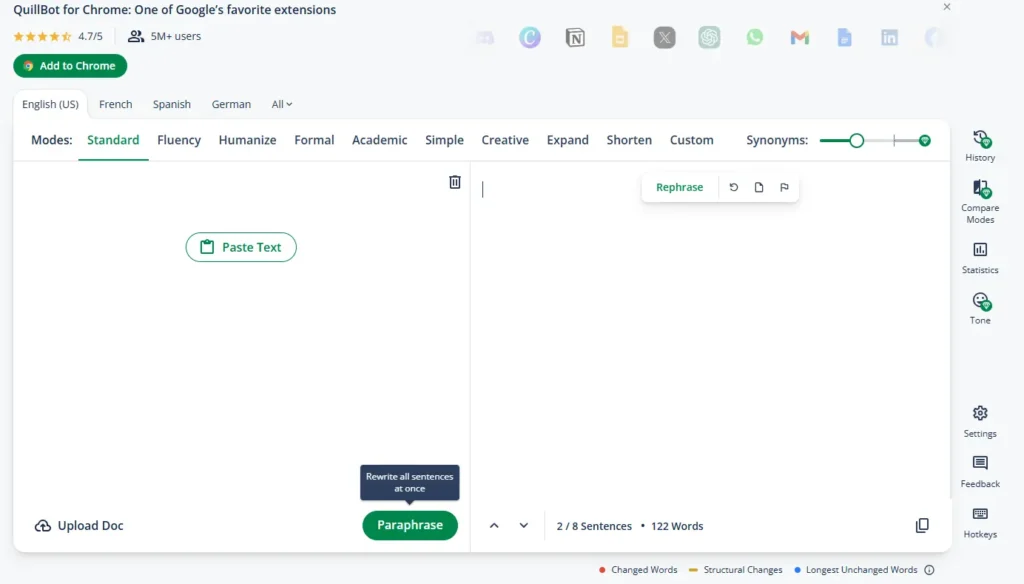
For this test, we generated a four-paragraph text using ChatGPT. The first two paragraphs were left completely unchanged, while the last two paragraphs were run through QuillBot using the humanize paraphrasing mode. This allowed us to compare how Turnitin classifies pure AI-generated content versus AI-generated text that has been further altered by a word-spinning tool.
Test Methodology
- Step 1: Generated a four-paragraph text using ChatGPT.
- Step 2: Left paragraphs 1 and 2 in their original AI-generated form.
- Step 3: Paraphrased paragraphs 3 and 4 using QuillBot’s humanize mode.
- Step 4: Submitted the full document to Turnitin to generate an AI writing report.
The objective was to see whether Turnitin would correctly classify:
- The first two paragraphs as AI-generated only (cyan highlight), and
- The last two paragraphs as AI-generated but AI-paraphrased using a word spinner (purple highlight).
Turnitin AI Detection Results — What We Observed
After submitting the full document to Turnitin, the AI writing report clearly distinguished between the two types of content used in the test.
The Report Breakdown:
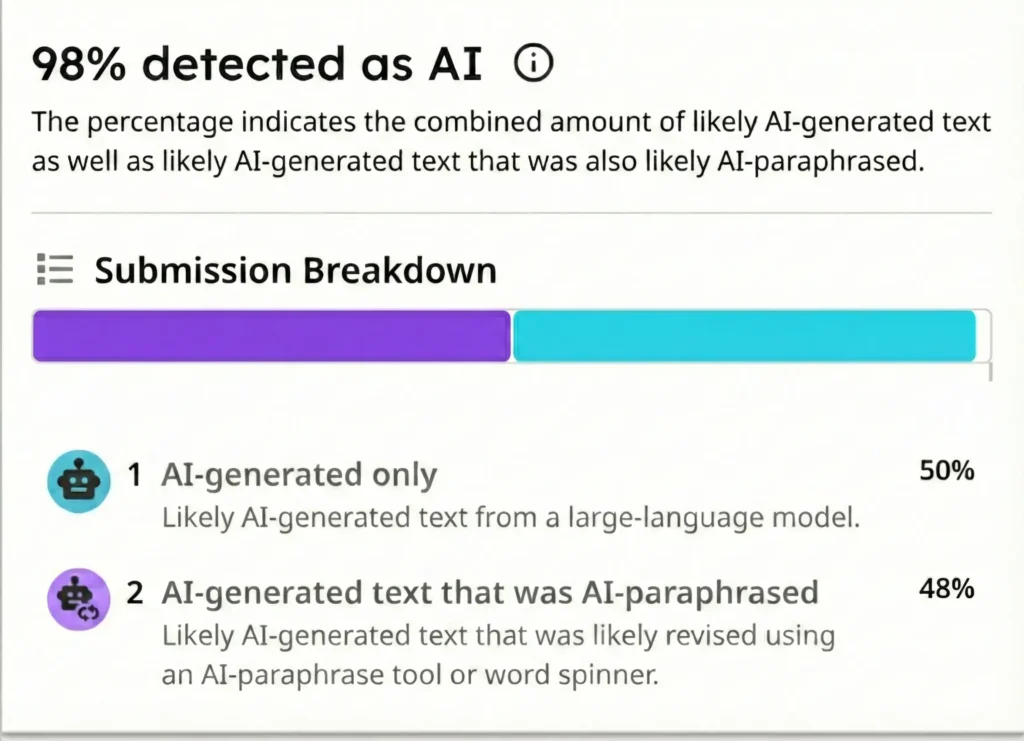
- Overall AI Score: The document received a 98% AI writing score.
- Paragraph Classification:
The first two paragraphs were marked as AI-generated only (50%), while the last two paragraphs were flagged as likely AI-generated and then paraphrased using an AI humanizing or word-spinning tool (48%). - Differentiation: Rather than labeling the entire submission as purely AI-generated, Turnitin applied its AI-paraphrasing detection, showing separate classifications within the same document.
- Highlights: The report highlighted the pure AI-generated sections in cyan, while the AI-paraphrased sections appeared in purple, indicating that Turnitin detected the original AI structure even after paraphrasing.
Interpreting the Results — Can Turnitin Really Detect QuillBot?
Based on our test, the answer is YES.
Turnitin does detect QuillBot-humanized text. When AI-generated content is paraphrased using tools like QuillBot or other AI humanizing/word-spinning tools, Turnitin is still able to identify the underlying AI origin. In our report, this was clearly shown through purple highlights, which indicate text that was likely AI-generated and then paraphrased using an AI tool.
Key Observations:
- Syntax Preservation: QuillBot modifies words and phrasing, but the original AI sentence structure is often preserved. Turnitin detects this structural pattern and flags the text accordingly.
- AI Paraphrasing Signals: Even after paraphrasing, the rewritten content retains characteristics common to AI-generated text, allowing Turnitin to classify it as AI-paraphrased rather than human-written.
- Clear Visual Indicators: Turnitin distinctly separates pure AI-generated text (cyan) from AI-generated and paraphrased text (purple), confirming that QuillBot-processed content is still detectable.
In short, paraphrasing AI content with QuillBot does not prevent Turnitin AI detection. The system is specifically designed to recognize AI-generated text, even after it has been modified using AI humanizing or word-spinning tools.
What This Means for Educators and Students
The introduction of the “AI-paraphrased” category in Turnitin reports changes the landscape of academic integrity.
For Students: It is critical to understand that using QuillBot to “clean up” AI text is not a foolproof way to hide its origin. The Turnitin AI detection technology is specifically trained to spot the artifacts left by spinners. Reliance on these tools can lead to reports explicitly labeling work as “AI-paraphrased,” which can be difficult to explain away.
For Educators: While the purple highlight is a strong indicator, it is not proof of misconduct. Educators should treat the AI report as a signal to investigate further.
Conclusion: Can Turnitin Detect QuillBot?
Yes. In our test, Turnitin’s AI writing report successfully identified text that was generated by ChatGPT and paraphrased by QuillBot. By flagging this content with purple highlights as “likely AI-paraphrased,” Turnitin demonstrated that simply swapping synonyms is no longer sufficient to bypass advanced detection.
However, detection is probability-based, not absolute. While it catches the majority of automated paraphrasing, highly edited or hybrid text may still yield mixed results.
Frequently Asked Questions (FAQs)
Yes. Turnitin can detect text that was originally generated by AI and later paraphrased using tools like QuillBot. Such content is typically highlighted in purple, indicating AI-generated text that was modified using an AI paraphrasing or word-spinning tool.
No. Paraphrasing AI text with tools like QuillBot does not remove AI detection. Turnitin is designed to recognize underlying AI structures even after automated paraphrasing.
Yes. Turnitin separates pure AI-generated content from AI-generated but paraphrased content, using different highlight colors and classification categories in the AI writing report.
Instructors are advised to look at the Submission Breakdown. Cyan indicates raw AI text; Purple indicates attempted disguising. However, most institutions require further evidence (like lack of draft history) before penalizing a student.
Was this helpful?